
1
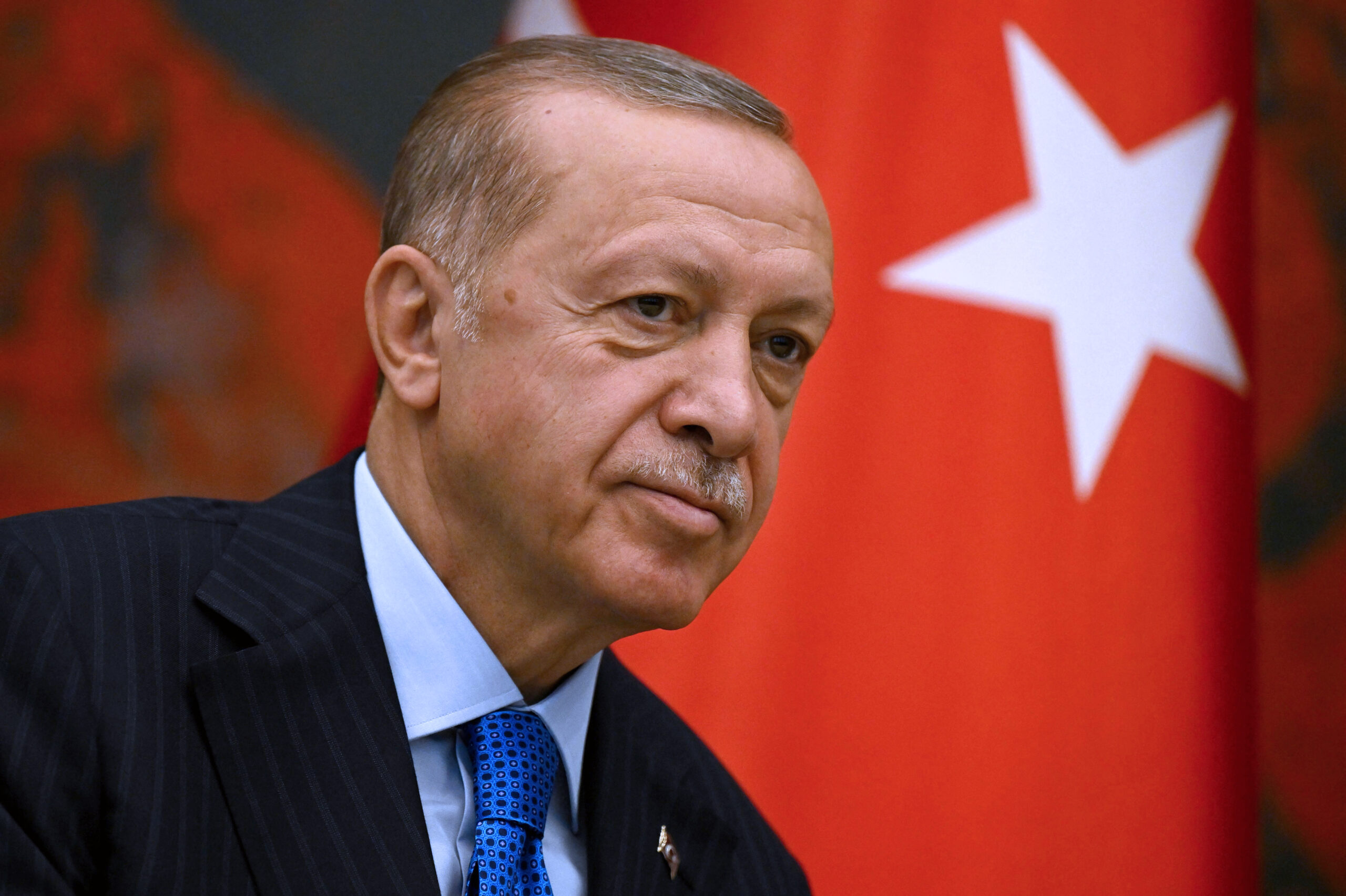
His Excellency Recep Tayyip Erdoğan has dominated Turkish politics for over two decades, progressing from Mayor of Istanbul (1994–1998) to Prime Minister (2003–2014) and serving as President since August 2014.
His Excellency Recep Tayyip Erdoğan has dominated Turkish politics for over two decades, progressing from Mayor of Istanbul (1994–1998) to Prime Minister (2003–2014) and serving as President since August 2014.
Birth: 26 February 1954 (Age: 72)
Source of Influence: Political
Country: Türkiye
Influence: President of 88 million Turkish citizens
School of Thought: Traditional Sunni
Status: Featured in current year
His Excellency Recep Tayyip Erdoğan has dominated Turkish politics for over two decades, progressing from Mayor of Istanbul (1994–1998) to Prime Minister (2003–2014) and serving as President since August 2014.
Electoral History and Global Power Status: Leading the Justice and Development Party (AKP) since 2001, Erdoğan secured three consecutive prime ministerial victories with parliamentary majorities in 2002, 2007, and 2011, ushering in unprecedented economic growth, infrastructure booms, and constitutional reforms. As Türkiye’s first popularly elected president, he won successive mandates in 2014 (52%), 2018 (52.6%), and a highly competitive 2023 runoff. He has systematically built Türkiye’s identity as a modern geopolitical powerhouse, bridging its traditional NATO membership with leadership across the Islamic world.
Prominent Role in the Makkah Pact: In August 2026, President Erdoğan spearheaded a monumental geopolitical realignment by joining Saudi Crown Prince Mohammed bin Salman and Pakistani Prime Minister Shehbaz Sharif to sign the Makkah Joint Defence Agreement (the Makkah Pact) in the holy city of Makkah. Functioning with a mutual defense architecture closely resembling NATO’s Article 5, the historic trilateral accord explicitly stipulates that an armed attack on any one of the three allied nations constitutes an attack on all three, signalling a major new security partnership among three of the Muslim world’s most influential states. Erdoğan hailed the Makkah architecture as a decisive, necessary step toward addressing Middle Eastern security threats from within the region itself, while emphasizing that the treaty is purely defensive and not directed against any outside nation.
Landmark PKK Peace Process and USA Relations: Following the PKK’s 2025 decision to disarm, a sweeping draft law reached parliament in August 2026 to facilitate the societal reintegration of former fighters. Concurrently, July 2026 signalled a major turnaround in USA–Türkiye relations when Donald Trump made the first visit to Ankara by a sitting American president in eleven years. Leveraging this momentum, Erdoğan expanded Türkiye’s role as a central Middle East mediator, offering to guarantee prospective USA–Iran accords while actively engaging Gulf leaders to prevent a wider regional spillover.
Regional Footprint in Syria: Following the historic collapse of the Bashar al-Assad regime, Türkiye maintains localized security zones across northern Syria to counter Islamic State (ISIS) remnants and armed Kurdish militias linked to the PKK. While Türkiye has accommodated millions of displaced Syrian refugees over the past decade, domestic public debate regarding their structured, safe repatriation has intensified significantly within parliament.
Economic and Domestic Political Challenges: The March 2024 local elections saw the AKP reduced to second place nationally at 35.5%, its lowest national marker since 2001, amid voter dissatisfaction over persistent inflation.
"Erdonomics"—Erdoğan’s long-standing, unconventional low-interest-rate dogma—contributed to a heavy depreciation of the Turkish Lira, which fell over 400% against the USD since 2008 and drove inflation to an 85% peak in late 2022. However, the appointment of Finance Minister Mehmet Şimşek and the subsequent pivot back toward orthodox fiscal policies have since stabilized market expectations.
Cultural Projection and Soft Power: In July 2020, Erdoğan signed a decree restoring the historic Hagia Sophia as an active mosque, reversing Mustafa Kemal Atatürk’s 1934 secular museum designation. In 2022, the United Nations formally adopted the country’s official name, Türkiye. This cultural footprint is strongly reinforced by the nation’s massive television and film export market. The Turkish broadcasting sector exports over 300 major cinematic productions to nearly 200 countries, engaging roughly one billion unique viewers globally. Historical epics such as Diriliş: Ertuğrul, Muhteşem Yüzyıl (The Magnificent Century), and Payitaht: Abdülhamid remain extraordinarily popular, with Diriliş: Ertuğrul alone surpassing 3 billion cumulative global views.
Stance on Palestine and the Gaza Trade Embargoes: In May 2024, Ankara announced a total suspension of its $7 billion annual direct trade relationship with Israel, subsequently closing Turkish airspace to Israeli flights and banning Israeli vessels from entering Turkish maritime ports. Despite these aggressive economic measures, Erdoğan continues to face domestic and regional criticism from opposition factions regarding persistent supply chain loopholes.
"The current system, which backs the mighty even if they are wrong and oppresses the weak even if they are right, has produced instabilities, crises, and injustices for decades."
$65 billion in tourism income in 2025
2nd largest standing military force in NATO